The Complete Tennis Bracelet Buyer's Guide
Ferko's Fine Jewelry
There is a specific moment when a thin line of light catches your eye just as you are about to say something to the person beside you. Whatever it was can wait. It is a tennis bracelet, the one that moves when its owner talks, reaches for her glass, tosses her hair. It is decided, right then and there: a tennis bracelet must be owned. And if you already have one, you already know why you want another.
Wanting one is the easy part, choosing one is where this guide comes in.The tennis bracelet is one of the most searched and most gifted pieces in fine jewelry, and setting style, gold color, diamond type, sizing and budget each change how it looks, wears, and lasts. Here is everything you need to look for in a diamond tennis bracelet you will still be wearing decades from now.
What Is a Tennis Bracelet, and Why Is It Called That?
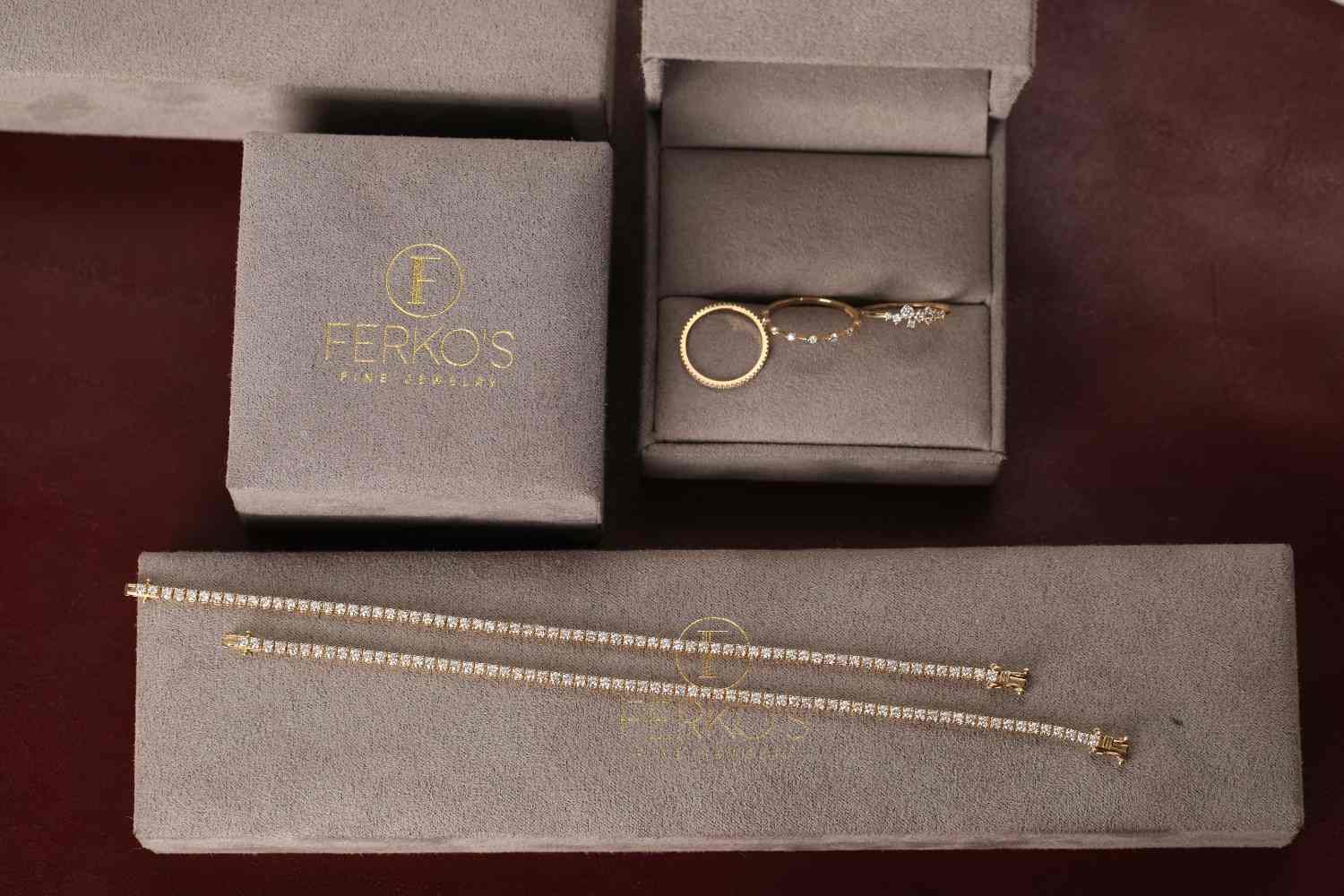
A tennis bracelet is a flexible bracelet set with a single, continuous line of matched diamonds, most often in gold or platinum. The stones are typically uniform in size and cut, which is what gives the bracelet its unbroken ribbon of light.
The piece was formerly known as the Eternity Bracelet, and the original name makes a case for itself: an unbroken circle of diamonds is nothing if not eternal. The current name, however, comes with a better story.
During a US Open match, tennis star Chris Evert's diamond bracelet broke and flew off her wrist, and she asked to pause play while she searched the court for her diamonds. The revolution was televised, and it sent the style's popularity soaring, along with a brand new name.

Tennis Bracelet Setting Styles: Prong, Bezel, and Channel
The setting determines how much light reaches each diamond, how the bracelet feels against your skin, and how much daily life it can take. These are the three tennis bracelet styles you will encounter most.
Setting | How It Holds the Stone | Light Performance | Best For |
|---|---|---|---|
Prong (3 or 4 prong) | Small metal claws grip each diamond. | Maximum light entry, delivering the brightest sparkle. | The classic choice for anyone prioritizing brilliance. |
Bezel | A thin rim of gold encircles each stone. | Slightly reduced light entry, providing a sleeker, modern glow. | The everyday choice for active lifestyles and snag-free comfort. |
Channel | Diamonds sit between two continuous gold walls. | Contained light entry, delivering a controlled, linear shimmer. | The modern choice for architectural taste and maximum stone protection. |
There is no best choice here, only the right one for how you live.
If you talk with your hands, teach small children, or type for a living, the bezel earns its keep. If your bracelet is coming out for dinners and celebrations, let the prongs do what prongs do. And if you want your diamonds secured behind clean, unbroken lines, channel is the answer.
Once the setting is decided, the next question is which color gold it should hold.
Which Gold Color Is Best for a Tennis Bracelet?
The honest answer is that there is no single best color, only the one that fits how you wear gold. If your jewelry box leans one direction, matching it keeps things seamless. If you like mixing metals, a tennis bracelet in a second color is one of the easiest ways to do it well. Beyond that, each color carries its own mood.
Gold Color | Character | Pairs Best With | Worth Knowing |
|---|---|---|---|
Yellow gold | Warm, rich, unmistakably classic. | Warmer skin tones, gold-toned watches, stacks with other yellow gold pieces. | The heritage choice, flattering diamonds with warmth. |
White gold | Cool, sleek, subtly modern. | Cooler skin tones, silver-toned watches, stacks with platinum pieces. | The seamless choice, making diamonds read icy and bright. |
Rose gold | Soft, romantic, slightly unexpected. | Most skin tones, two-toned watches, stacks with mixed metals. | The distinctive choice, making the whole piece read personal. |
Whether that mood is a yellow gold tennis bracelet, a white gold tennis bracelet, or a rose gold tennis bracelet, the table above tells you which way to lean.
What it cannot say loudly enough is this: insist on solid gold. A 14K gold tennis bracelet offers the sweet spot of durability and rich color, with enough alloy strength to handle a piece that lives on your wrist, through handshakes, steering wheels, and everything else your hands do in a day. Plated versions will not survive that life.
Natural vs Lab-Grown Diamond Tennis Bracelets
Lab-grown diamonds are real diamonds. They share the same chemical composition, hardness, and fire as mined diamonds, and no jeweler can tell them apart by eye.
The differences worth considering are these:
The Winter-Proof Hoop: Avoiding The Great Scarf Snag
When the sun goes down, it’s time to go bigger. Medium hoops (30–50mm) in yellow gold are warm, flattering under candlelight, and genuinely hard to get wrong. For special occasions, our handcrafted 14k diamond hoop earrings and teardrop hoop earrings are the move. They catch light with every head turn, which, as it turns out, is a very useful quality at dinner parties. The diamond styles work just as well for the morning commute that follows, no outfit change required.
Heading text | Natural Diamonds | Lab-Grown Diamonds |
|---|---|---|
Origin | Formed in the earth over billions of years. | Grown in controlled conditions over weeks. |
Physical properties | Carbon, 10 on the Mohs scale, full brilliance. | Carbon, 10 on the Mohs scale, full brilliance. |
Price at equal quality | Higher per carat. | Meaningfully lower per carat. |
Certification | Graded by GIA. | Graded by IGI. |
So is a lab-grown diamond tennis bracelet the same quality as a natural one? In every way your eye or a gemological instrument can measure, yes. The honest distinction is romantic rather than physical: some buyers want the billion-year origin story, some prefer a modern one. Neither choice is the wrong one.
How to Choose the Right Diamond Size and Bracelet Weight
The right tennis bracelet fits closely enough to stay put and moves enough to catch light, with stones scaled to your wrist rather than to ambition. Here is how to get both parts right.
- Measure your wrist with a soft tape, then add about half an inch. That is your bracelet length. Proper tennis bracelet sizing leaves room for one finger to slide between the bracelet and your wrist, not more.
- A bracelet that fits well should drape toward the base of your hand without spinning freely or sliding over your wrist bone.
- Total carat weight, not individual stone size, sets the bracelet's presence. Between 2 and 4 carats total looks refined and suits daily wear. Between 5 and 7 carats total is a statement that holds its own at any occasion.
- A box clasp with a safety latch, or a hidden clasp with a figure-eight lock, is what keeps a diamond bracelet where it belongs.
How to Wear a Tennis Bracelet
If you are wondering how to wear a tennis bracelet, the honest answer is in whichever combination feels like yours. Here are a few directions we suggest:
- Solo: One line of diamonds on a bare wrist is the whole argument. This is the piece at its most confident, and it needs no support.
- Stacked with gold: A stacking tennis bracelet approach works best with contrast. Wear one diamond line next to one or two plain gold bangles or a chain bracelet, so the diamonds stay the point.
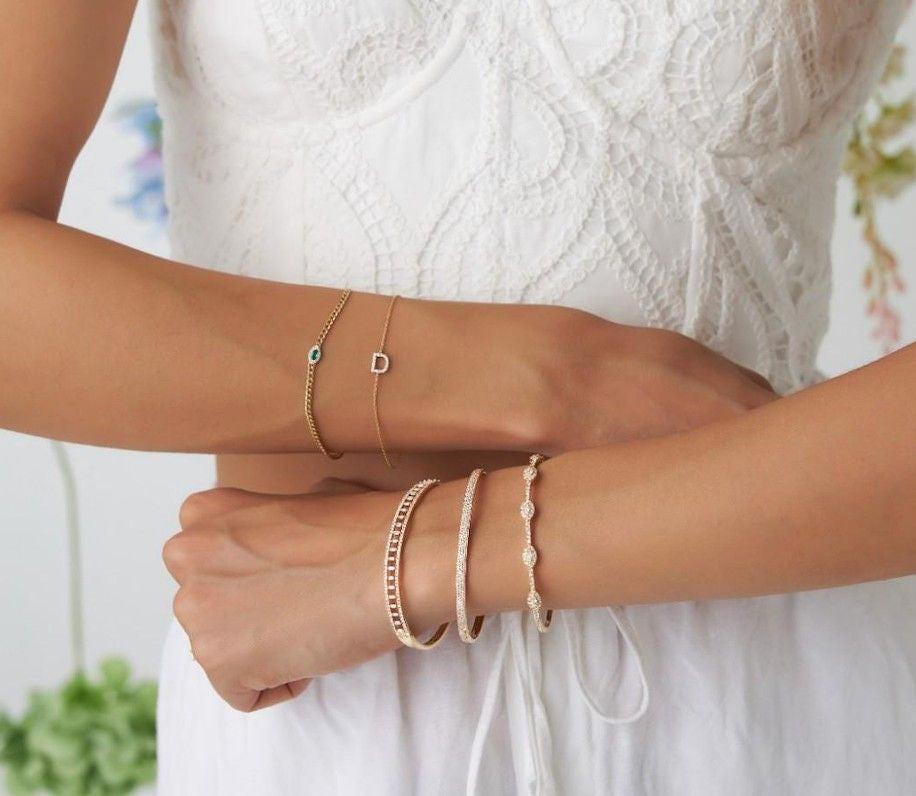
- Layered by texture: When layering bracelets, vary the widths and finishes rather than the quantity. A slim tennis bracelet, a bangle, and a watch can share a wrist without competing.
- With its matching act: A tennis bracelet and tennis necklace worn together is a deliberate, red-carpet-borrowed move.
However you combine it, the next question is what you should expect to pay for it.
What to Look For at Every Budget
The best tennis bracelet at any budget is the one where nothing on the verify list is missing. Here is what the market looks like at each tier:
Budget | What You Can Expect | What to Verify |
|---|---|---|
Under $500 | Lab-grown diamonds at lower total carat weights, or smaller natural stones. Daintier proportions in solid gold. | Solid gold rather than plating or vermeil. A secure clasp. Honest carat weight disclosure. |
Under $1,000 | Solid 14K gold with lab-grown diamonds in the 1 to 2 carat total range. Wide variation in craftsmanship quality. | Independent certification (IGI for lab-grown). Solid gold settings rather than hollow casings. A safety latch on the clasp. |
$1,000 and beyond | Higher total carat weights and better color and clarity grades. Natural diamond options. Finer finishing. | Grading reports. Close-up photos of the prong or bezel work. The maker's repair policy. |
At Studio Ferko’s, every tennis bracelet we make is handcrafted in solid 14K gold, in the USA, and everything from the first sketch to the final polish stays in-house.
We use IGI-certified lab-grown diamonds, with GIA grading available for natural diamonds upon request.
Our lab-grown styles are what keep a well-made bracelet within reach of that under $1,000 tier, and everything on the verify list above comes standard.
The Tennis Bracelet as a Gift
A tennis bracelet is classic diamond jewelry in its most giftable form. It is instantly recognized, whether she is waving across a parking lot or handing back a menu.It suits the occasions that deserve more than a card:
- Anniversaries: A gold tennis bracelet is its own metaphor here, one unbroken line for however many years it marks.
- Milestone birthdays: The decades deserve a gift that stays on the wrist long after the party.
- New chapters: A graduation, a promotion, a first apartment, anything she worked for and got.
- Just because: Plenty of women buy their own without waiting for a reason, and that story is as good as any.
Most Ferko's pieces are made to order and ship in about seven to ten business days, worth knowing if the anniversary is already circled on the calendar.
Choosing Yours
Every decision in this guide points to the tennis bracelet that fits your wrist, your days, and your reasons. It will ask for some routine care in return, and if it ever needs attention beyond that, our post-sale repair service is a message away. The rest is just picking the one.