Family Portrait Season: Jewelry That Photographs Well
Ferko's Fine Jewelry
Family portrait season is here, and you thought about the outfits, the scenery, and how the photos should turn out weeks ago. But when the day comes, you are the one who almost walked out without a single piece of jewelry on, so you run back in, grab the first pair of studs from the tray by the mirror, and head out anyway.
By the time everyone is standing in front of the photographer, you notice the small things. Your daughter's necklace has flipped backward. Your little one's collar is doing something no amount of straightening can fix. And the studs you grabbed on the way out do not catch nearly as much light as you had hoped.
Maybe you cannot fix your daughter's necklace or your little one's collar. But you certainly can plan for your jewelry to complement the photos.Here is how to get it right before the shoot starts.
The 3 Rules of Jewelry That Photographs Well
Jewelry looks well on camera when it fits the scale of the shot, survives a couple of hours of movement without shifting around, and does not clash in metal tone with family members standing next to you.
Get those three right and you are basically done. Everything below is just how to actually pull each one off.
Getting the Size Right
A camera compresses everything. A piece you think is substantial can look either barely there or overwhelming once it is flattened into a photo, especially in a group shot where family members are standing several feet from the lens.
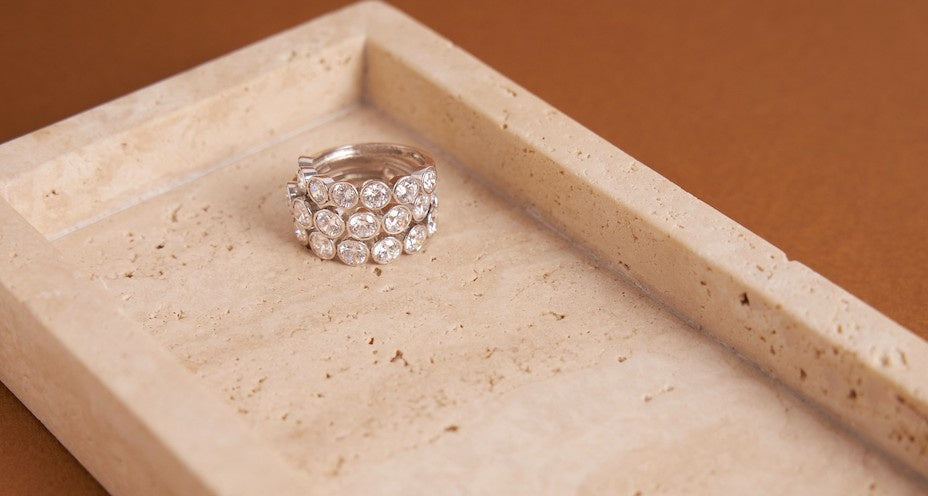
- Since most sessions move between solo shots, couple shots, and the full family, pick pieces that hold up at both distances rather than something that only works up close. Dainty diamond necklace styles and stackable diamond rings tend to do this well, since they look clearly in a solo shot and don’t overwhelm a crowded frame.
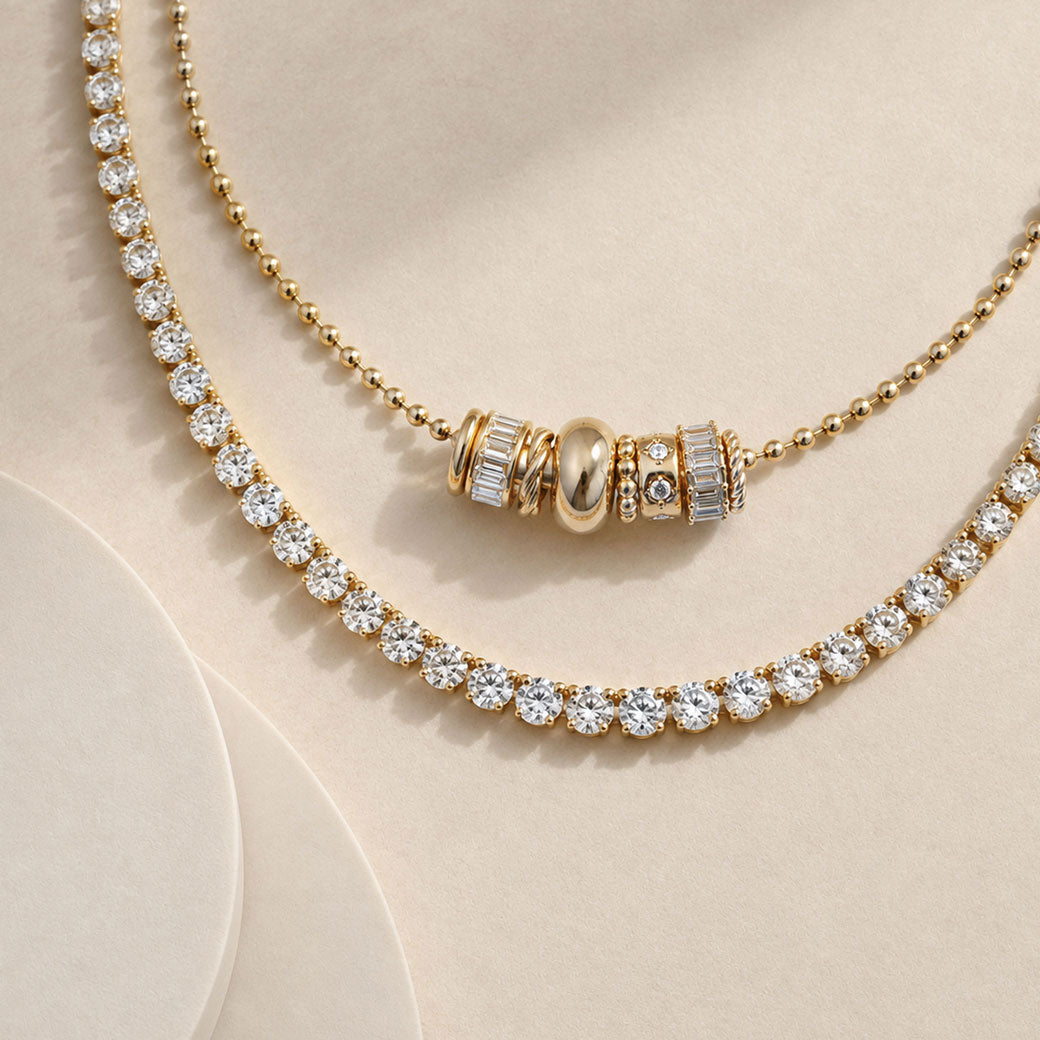
- If you are layering, give the chains room to breathe. Layering necklaces spaced a few inches apart read as distinct pieces on camera, while a stack that sits flush just blurs into one line of gold.
- Skip anything with a lot of movement or dangle for group shots. It looks great in a solo portrait but tends to catch light unevenly, or disappear entirely, once you are standing further back.
- Scale to the group. What looks right in a two person portrait can get lost, or suddenly look like too much, once the whole family is packed into the same frame.
Camera-Friendly Settings
Two hours of standing, sitting, hugging, and being repositioned by a photographer takes a toll on jewelry nobody designed with that in mind. And some settings just hold up better than others.
Setting | How It Looks on Camera | Why It Holds Up |
|---|---|---|
Bezel | Smooth, unbroken outline with no visible prongs. | Stone is fully wrapped in metal, so nothing snags on clothing or hair. |
Prong | Light scatters from multiple angles as you move. | Secure and classic, though open prongs can catch on sweaters or scarves. |
Eternity | One continuous band of light instead of a single point. | Stones wrap the full band, so pressure and wear distribute evenly. |
Metal and Color Coordination
Should everyone wear the same metal in family photos? Not necessarily, but some coordination goes a long way, especially when several people are standing close together when the camera can pick up every inconsistency.
Metal | Best Against | Group Coordination Notes |
|---|---|---|
Yellow gold | Warm skin tones, fall and winter wardrobe colors. | Looks warm and rich on camera, works well as the anchor metal for the whole family. |
White gold | Cool undertones, blues and jewel tones. | Creates a crisp, cool contrast that can stand out if the rest of the family leans warm. |
Rose gold | Neutral and warm undertones, blush and muted palettes. | Softens a look, best worn by one or two people rather than the whole group. |
Skin tone matters too, but the metal that actually looks best on you is usually the one you always wear without thinking. Start there, and let that be the one you pick to anchor the whole group.A second tone can still show up here and there, on one bracelet or a single pair of earrings, without throwing the whole photo off.
A family in matching 14k gold rings or 14k gold necklaces looks coordinated in a photo even when the actual pieces are completely different from person to person. It does more of that work than people expect.

Choosing by Piece
A minimalist 14K gold ear cuff should add something without taking over. For everyday wear, that usually means a comfortable fit and enough detail to make it look part of your outfit.
Earrings
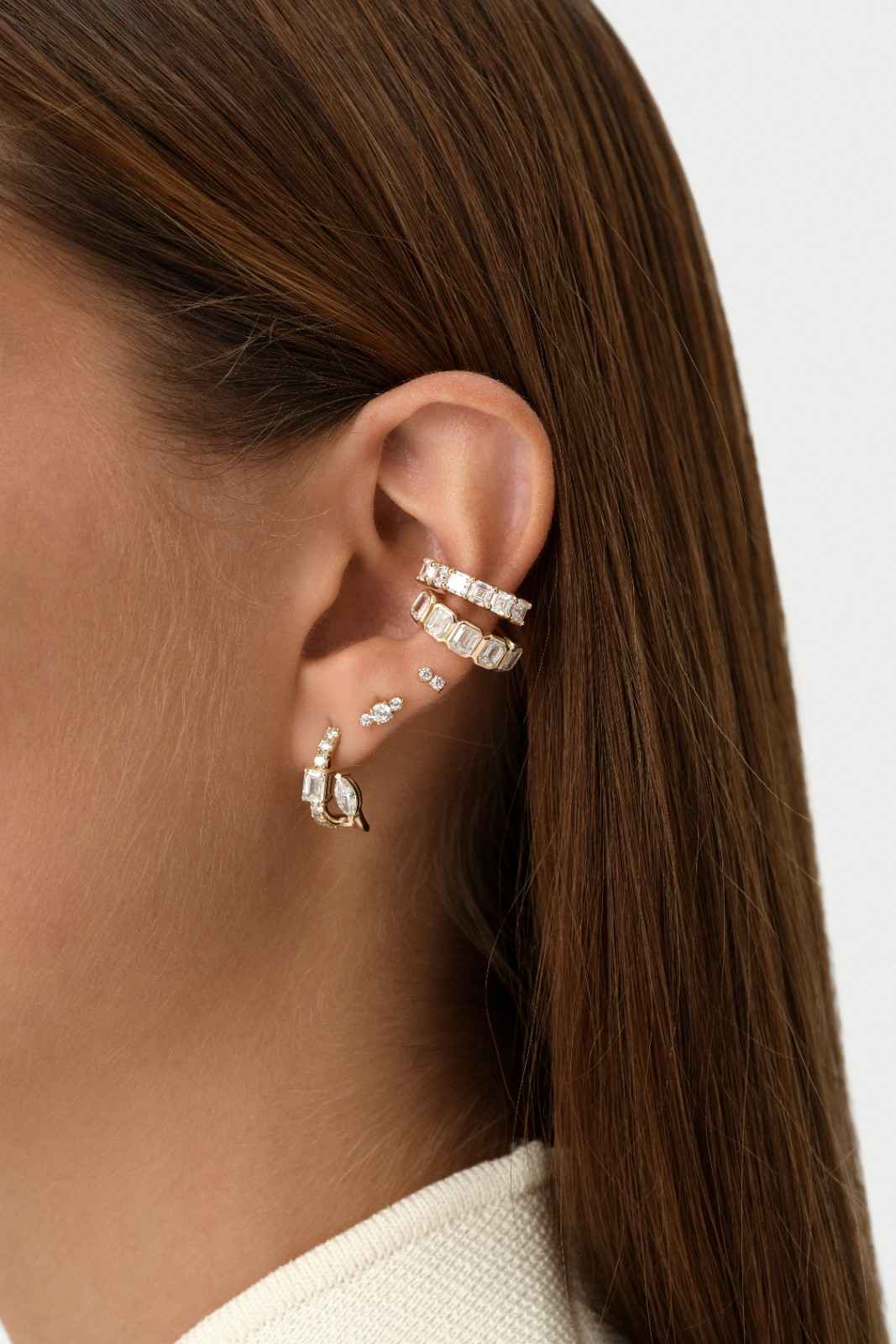
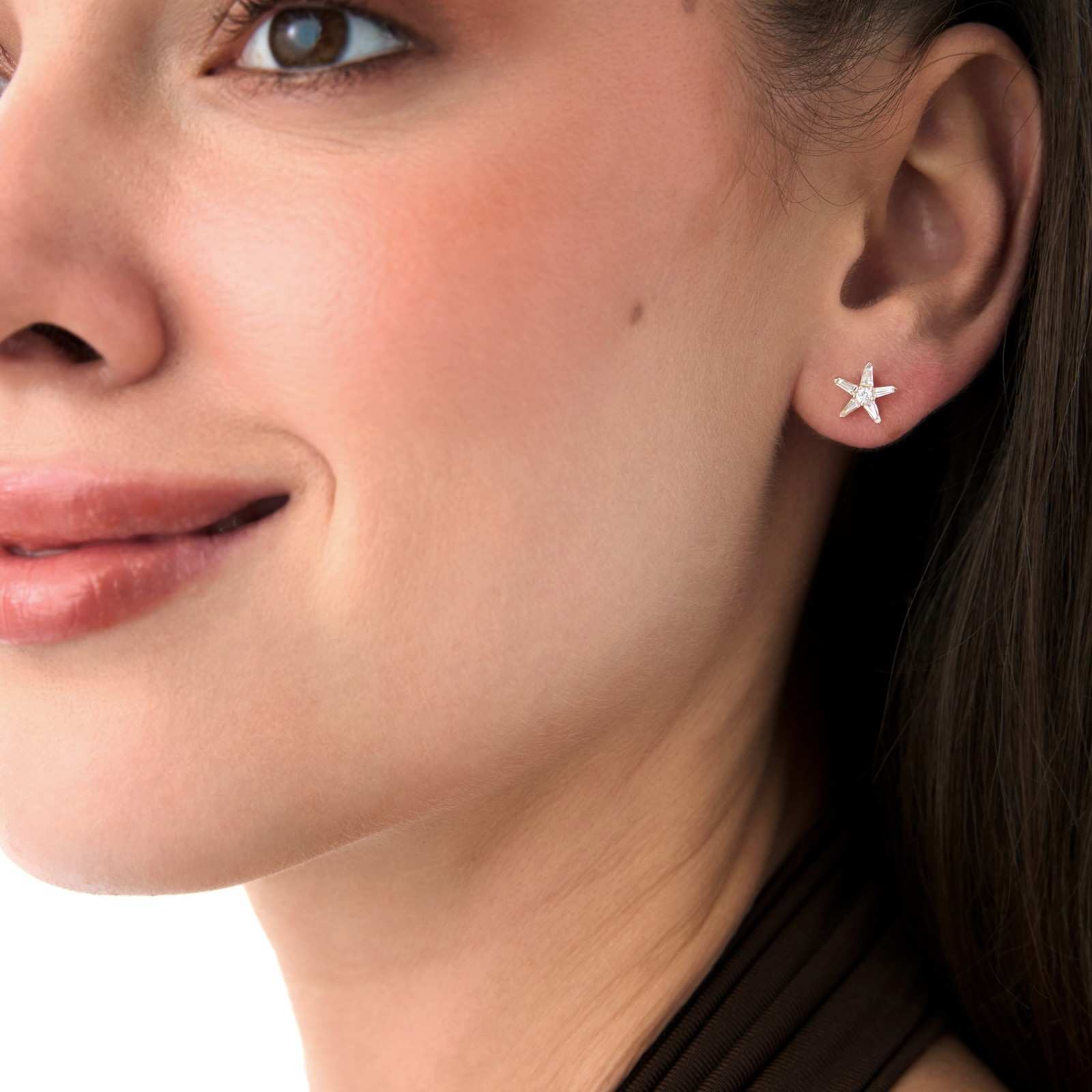
If there is one piece worth getting right, it is earrings. They sit closest to the face, so they will surely be noticed in every shot. Diamond studs for women are about as safe as it gets. They catch light head on and hold their sparkle no matter how you turn for the next pose. Gemstone earrings do something similar but bring color into the mix.Huggies sit close enough to the ear, so they read almost like studs from a distance.Gold hoop earrings may move more, so the light hits them differently. They may be better suited to solo portraits.
And if you already wear an ear cuff as part of your everyday stack, keep it in. It adds a little extra detail without turning into the main thing anyone notices in the photo.
Necklaces
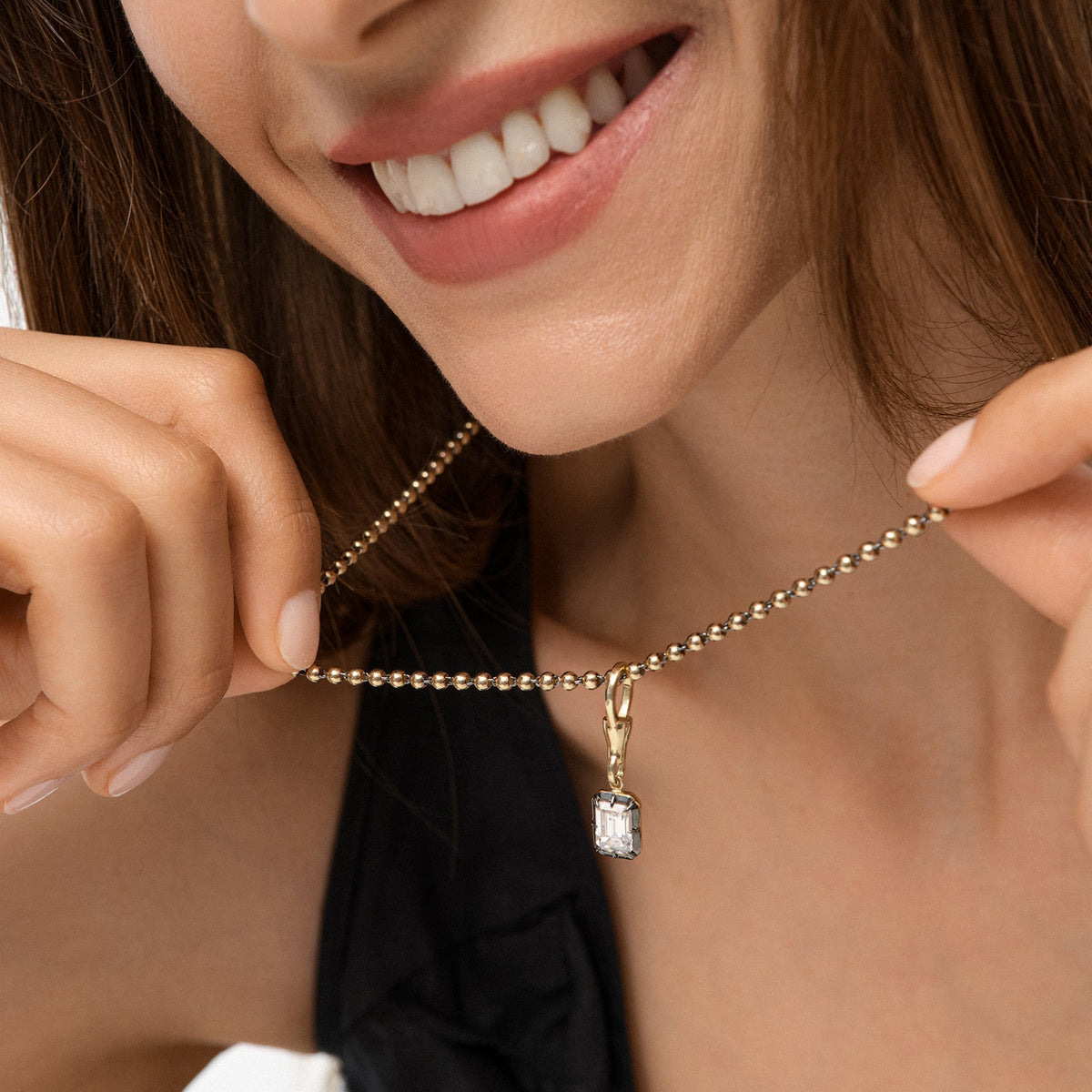
Something that sits close to the collarbone is usually the safest bet, mostly because it stays out of the way. A dainty diamond necklace does that well, small enough to never pull focus from anyone's face. A diamond solitaire necklace works a little differently. It has one stone and nothing else is competing, so it still looks clear from across the room.
Worn solo, a diamond bezel necklace reads as one clean point of sparkle instead of getting lost in a busy shot.
Gemstone necklaces do the same with color, and that can actually help them stand out more.A tennis necklace takes a different approach entirely, as one continuous line of stones looks as a steady band of light whether the camera is close or far back.
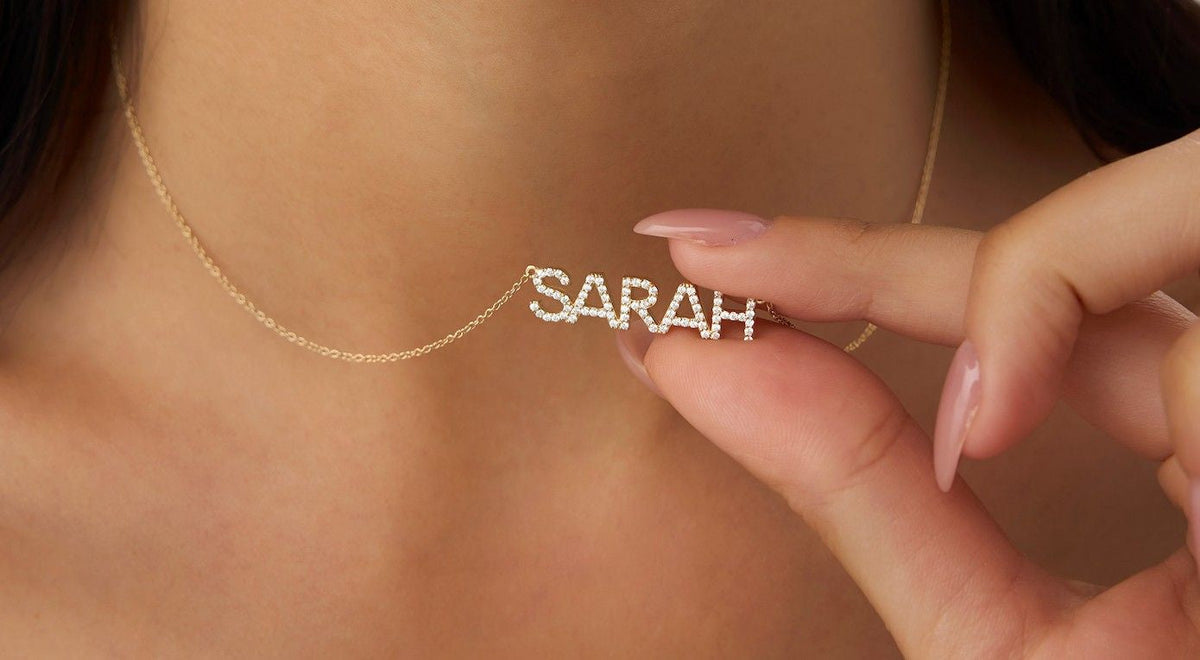
Pendant and initial necklaces read better up close than across a group.
And last but not least come the charm necklaces. They are trickiest of all because those small moving pieces look wonderful close up but may blur the second you step back, so save them for portraits, not the big group shot.
Rings
Rings get repositioned constantly during a photo session. You may be asked to put your hands on your shoulders or around your toddler, fold them for the classic pose.
Stackable diamond rings handle that kind of movement well, since the light catches several points instead of one.
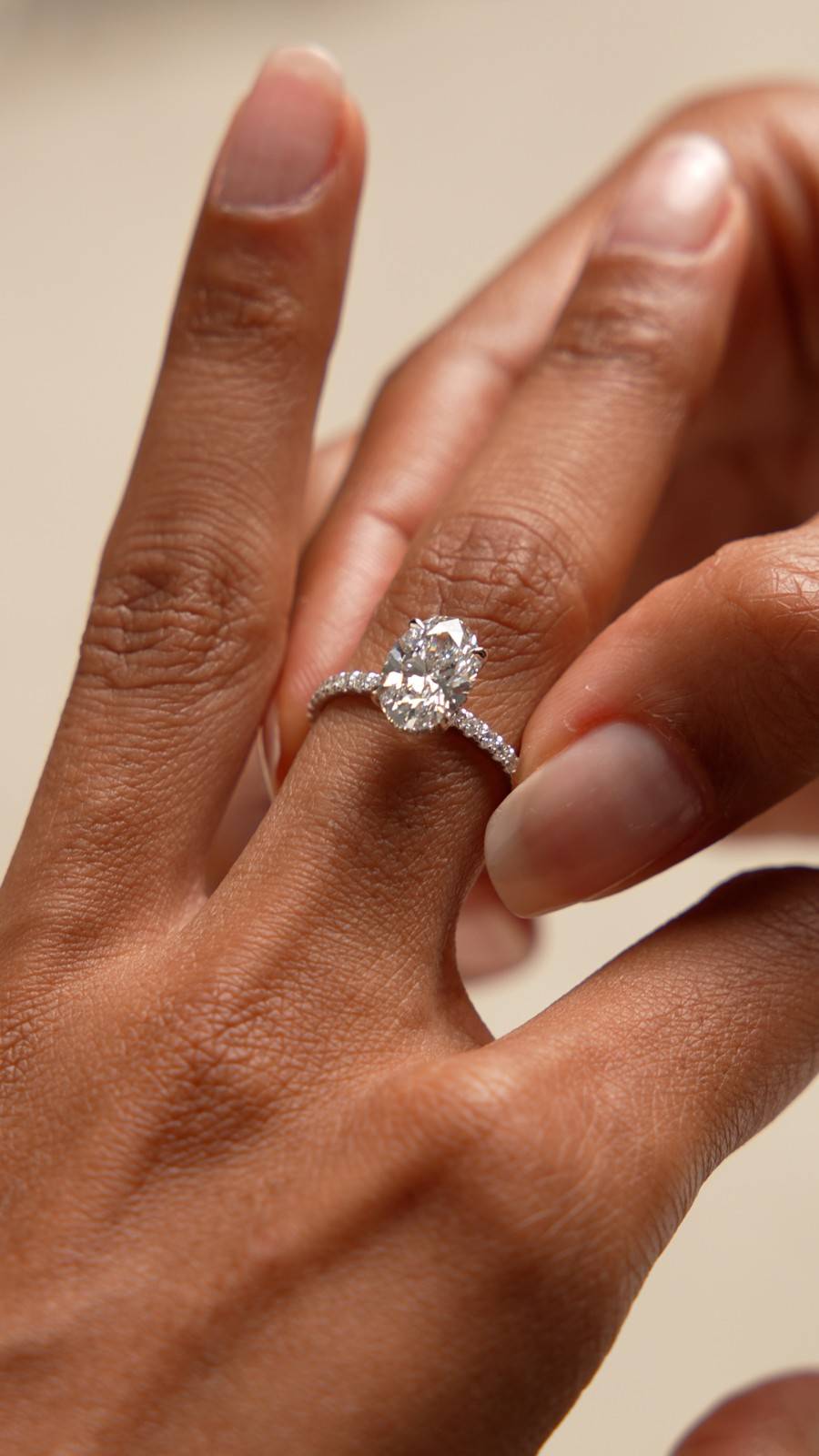
An eternity diamond ring or diamond signet ring stays put no matter how your hand turns because there is no stone that can flip out of view.
Wedding bands need the least thought of all. They are already part of your hand every day, so all they really need is a quick polish before anyone shows up with a camera. And gemstone rings bring in a bit of color that can pick up whatever you are wearing.
Personalization That Adds A Little More Meaning to the Photo
Personalized jewelry with a single letter, initials for each child or a birthstone marking the year a family started growing adds a small layer of meaning that plain pieces do not. Nobody needs to notice it in the photo for it to matter. It is just there and happens to be the kind of detail someone eventually asks about.
Before the Shoot
A few minutes of prep the night before can make a hectic morning a whole lot easier.
- Wipe every piece down with a soft cloth before you walk out the door. Lotion and sunscreen residue barely show in daylight, but studio lighting picks it up right away.
- Check every clasp and closure at home, not while everyone is already lined up in front of the camera.
- Try pieces on with the actual outfit. The morning of the shoot is not the time to realize a necklace clashes with a collar.
- If the shoot is outdoors, which most are these days, plan for a bit of wind and direct sun.
Hoops and dangle earrings will move more than they do indoors, and anything with a lot of shine can pick up glare in strong afternoon light. A quick pass through midday shade usually fixes it. - Shooting at home instead? The light is softer and easier to control, and you always have a mirror nearby if something needs adjusting at the last minute.
The Photo Is the Point
Family photos get looked at for years and become a sweet memory. The jewelry ends up part of the memory too, whether it is an initial necklace your daughter has worn in every photo since she was five or something new you picked out just for this one. Get the pieces right, and the rest of the day is just about being there and enjoying yourself.