Is Buying Diamond and Gold Jewelry a Smart Investment?
Ferko's Fine Jewelry
Gold has been considered valuable for so long that questioning it feels almost meaningless. Empires were built on it. Wars were fought over it.
In 2025 alone, it rose almost 60%. Central banks are currently buying it in record quantities.
So is gold jewelry a good investment? It is, with some useful context. The more interesting question for most people is not whether it makes sense in the abstract, but whether it is the right move for them specifically.
Why Gold Holds Value Over Time
Gold has been valuable for so long that the more interesting question is why it keeps getting more so. The answer is simple. There is not much of it, and everyone wants it.
All the gold ever mined in human history would fit into roughly three and a half Olympic swimming pools. New supply grows at just 1 to 2% per year, which is slow even by mining standards. And it does not corrode, tarnish, or degrade. A solid gold bracelet buried for two thousand years comes out looking essentially the same. Gold bracelets, rings, and chains have been passed down through generations precisely because the material does not diminish.
The financial case is equally straightforward. Gold as a hedge against inflation is one of the most reliable strategies in existence. When the purchasing power of paper currency falls, gold tends to rise. Central banks currently hold over 36,000 tonnes of it in reserve, and that number has been climbing.
That is not a number that appeared overnight. It is the result of sustained, long-term demand from investors, institutions, and people who simply wanted something beautiful that would hold its value. All three groups made the right call.

14K vs 18K Gold: Which Is Worth More?
Both are solid gold jewelry. Neither is gold plated. The difference is in purity, and purity affects price, durability, appearance, and resale value in ways that are worth understanding before you buy.
. | 14K Gold | 18K Gold |
|---|---|---|
Gold purity | 58.3% pure gold | 75% pure gold |
Durability | More durable. Better for everyday wear. | Slightly softer. More susceptible to scratching over time. |
Color | Slightly lighter yellow tone. | Richer, deeper yellow. More visually striking. |
Price | More affordable at purchase. | Higher upfront cost due to gold content. |
Resale value | Lower gold content means lower melt value. | Higher melt value. More attractive at resale. |
Best for | Daily wear, stacking, everyday fine jewelry. | Investment-minded buyers, heirloom pieces, special occasions. |
The practical takeaway is that if you wear jewelry every day and want pieces that hold up without requiring a second thought, 14K gold is the smarter choice. If you are buying with long-term value or resale in mind, 18K gold carries more gold content and commands a higher rate at resale.And if the solid gold vs gold plated question is still open, the answer is less complicated than it sounds. Solid gold does not flake, fade, or reveal a different metal underneath after six months of wear. Gold plated does. And that is genuinely all there is to it.
Diamonds as an Investment: What Actually Drives Diamond Value
Diamonds are not gold. They do not have a universal spot price, they are not traded on open markets, and their value does not appear on any stock market screen. What they do have is a well-established quality framework that determines whether a stone holds its value over time.
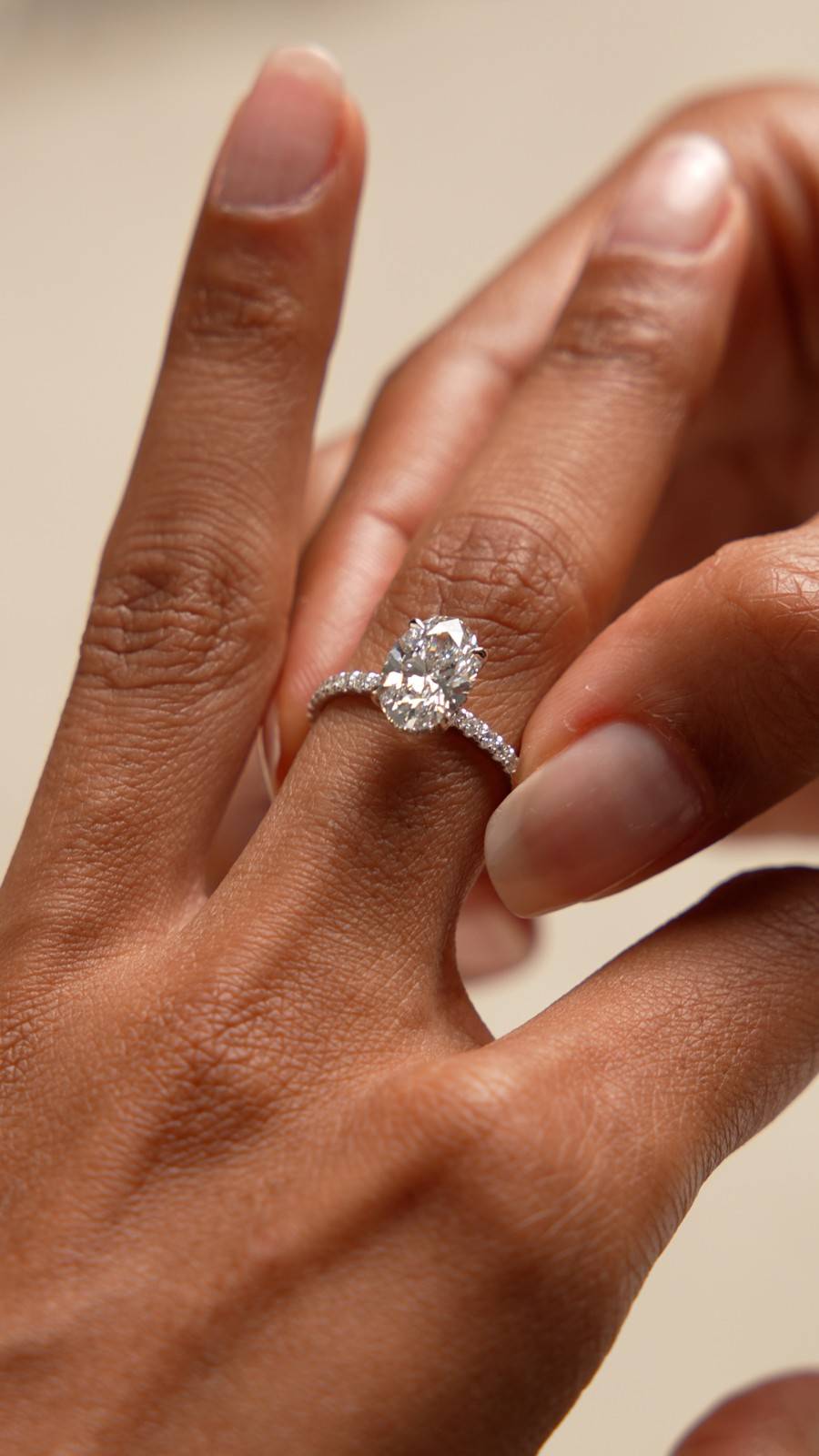
Learning it will make buying a diamond become considerably less of a guessing game.The 4Cs of diamonds are the industry standard, and they are the single most important thing to understand if you are buying a diamond ring or diamond earrings with value in mind.
Cut: The most important of the four, and the one most people underestimate. Cut determines how light moves through the stone. A well-cut diamond makes every other metric look better. A poorly cut one does the opposite, regardless of what the certificate says.Color: Graded on the GIA Color Scale, which runs from D (completely colorless) to Z (noticeable yellow tint). The scale moves in one direction: The closer to D, the rarer and more valuable the stone. For most buyers, a G or H grade is genuinely indistinguishable from D to the naked eye and considerably easier on the budget.
Clarity: Measured on the GIA Clarity Scale, which runs from Flawless (FL) at the top, through Very Very Slightly Included to the 1st degree (VVS1), Very Very Slightly Included to the 2nd degree (VVS2), Very Slightly Included (VS1, VS2), Slightly Included (SI1, SI2), and down to Included (I1, I2, I3) at the bottom. The further down the scale, the more visible the imperfections. VS1 and VS2 are the sweet spot for buyers who want a clean stone at a price that does not require a sit-down conversation with their bank.
Carat: Weight, not size. A 2-carat diamond is worth significantly more than two 1-carat diamonds of identical quality. Rarity compounds quickly as stones get larger.
On diamond value over time; let’s just say that diamonds hold value, they do not build it the way gold does. A well-specified stone from a reputable seller with GIA certification will retain most of its purchase price at resale. A poorly specified stone without documentation is a considerably less cheerful story.
Gold Jewelry vs Gold Bars and ETFs: The Real Difference
If pure financial return is the only goal, a gold ETF will outperform jewelry. An ETF (Exchange-Traded Fund) is essentially a financial instrument that tracks the price of gold on the stock market. You buy a share of it, it moves with the gold price, and you never have to find somewhere to store it. Clean and efficient.
Bracelets, rings, and necklaces work differently. Solid gold jewelry carries a craftsmanship premium at purchase and a liquidity discount at resale. That is just the math. But the comparison is not actually apples to apples. It gives you something a bar or an ETF simply cannot. It is something you can wear, and with joy no less, and pass down. So the gold jewelry investment case is not purely financial. It is material value plus daily use plus emotional significance, which adds up to something no algorithm is going to capture.
. | Gold Jewelry | Gold Bars / ETFs |
|---|---|---|
What you own | A physical object with aesthetic and/or sentimental value. | A financial instrument. No physical asset. |
Liquidity | Lower. Resale takes more effort and time. | High. Can be traded instantly. |
Return on investment | Tied to gold price plus craftsmanship and brand premium. | Tracks gold spot price closely. |
Enjoyment factor | You can wear it. Considerably harder to wear an ETF. | None |
Markup at purchase | Includes craftsmanship, design, and retail margin. | Minimal. Closer to spot price. |
Emotional value | High. Often passed down across generations. | Zero. |
Best for | People who want value and beauty in one purchase. | Pure investment with no lifestyle component. |
So if the question “Is gold jewelry a good investment” still remains, let us say yes and add that only if you approach it the right way. Buy solid gold jewelry, understand your karat, choose pieces with strong craftsmanship, and keep your documentation. If you are looking to buy gold jewelry online, those four principles hold regardless of where you shop.
The Lifecycle of Fine Jewelry: What Happens When You Are Done With It
Solid gold jewelry does not have an expiry date, but tastes change, circumstances change, and pieces that were once worn every day sometimes end up sitting unworn. The good news is that solid gold does not lose its worth in the drawer, whether you wear it or not.
There are ways to put it back to work. Most people either hold onto pieces indefinitely or attempt a fine jewelry resale through a platform or estate buyer. It typically returns a fraction of the original retail price, but that fraction exists because the material held its value in the first place.
Ferko's Loop is another option. It is our gold jewelry trade in program that offers store credit rather than cash resale. You bring in your once-loved gold pieces, whether they are Ferko's originals or purchased elsewhere, and receive credit toward anything new. So gold keeps its worth, and you put that worth back to work. It is a straightforward jewelry trade in program and worth considering alongside other options before any piece ends up sitting unused.
The Full Picture
Gold has outlasted every currency, every empire, and every investment trend that tried to replace it. Diamond investment value has held steady for centuries, and fine jewelry, when bought well and cared for properly, sits at the intersection of both: Something that holds its worth, gets better with age, and does not require you to stare at a screen to enjoy it. The math works. The rest is just finding the right piece.