The Modern Bridal Jewelry Set: How to Build a Wedding-Day Trio That Photographs Beautifully and Wears Comfortably
Ferko's Fine Jewelry
There is a specific kind of panic that sets in somewhere between the dress fitting and the rehearsal dinner. You've written the most heartfelt vows, the seating chart is shaping up to be okay, your dress is just like you've always dreamed of and the hairdo is a done deal. Everything is going smoothly, except for the bridal set. You still have three open tabs on your laptop and a saved Instagram folder titled “maybe."
There is a misconception telling you that you need to have a pre-matched set. But it's not the 1960’s and the modern approach to bridal jewelry is about building your own with intention.
In this guide we'll walk you through jewelry that photographs better, feels more personal, and survives the whole day without you once thinking about it.
The Traditional Matching Set Approach vs. What a Modern Bridal Jewelry Set Means Today
The traditional bridal set was simple to understand. You walked into a store, pointed at a display case, and bought the earrings, necklace, and bracelet that the manufacturer had already decided belonged together. They matched because they were literally from the same collection, finished the same way, stamped with the same logo. Coordination was handled for you.
The modern approach works from the opposite direction. Today's bride starts with her dress, her material preference, her own sense of proportion, and a clear anchor piece. Then she builds the rest of the set around that anchor. The pieces do not need to be from the same collection, and they do not need to match in the literal sense. They just need to relate to each other, balance each other, and collectively serve the overall look.
The difference is more structural than aesthetic. A traditional set asks you to settle for what has already been styled together by someone who knows nothing about you. A modern set is the one you build around your own taste, your dress, and the way you want to feel on the day.

How to Choose Your Anchor Piece and Build the Rest of the Set Around It
The anchor piece is the one item in your wedding jewelry that carries the most visual weight. Everything else is calibrated around it.
Identifying your anchor is usually straightforward: it is the piece you keep coming back to in your research, the one that made you stop scrolling. For most brides, that is either a pair of bridal earrings or a bridal necklace.
Choose your anchor first, then build the rest of the set using these principles:
- Start with your dress neckline and face shape. A strapless gown with an open chest almost always calls for a necklace as the anchor. A high-neck or illusion-back gown usually redirects attention to the ears, making statement earrings the natural anchor.
- One piece should lead, the others should follow. If your earrings are dramatic, your necklace should be minimal or absent, and your bracelet should sit quietly. If your bridal necklace is the star, choose stud earrings and a delicate bracelet.
- The anchor should be the piece you would keep if you had to remove one or two of the three. That test clarifies what actually matters to you, which makes the rest of the decisions easier.
- Scale down as you move outward. Anchor at the face or neckline, then graduate to smaller pieces at the wrist. Usually, people look at a bride starting from the top, moving to the center, and ending with the surrounding details, and this follows the same pattern.
Check the three pieces together on your body, in your dress, in good light because what looks balanced on a velvet tray does not always look balanced on a human being.
And if you are also choosing jewelry for your bridesmaids, pick with the same logic: pieces that photograph well and feel personal enough to wear again long after the wedding.
Metal Color and Photography: How Yellow Gold and White Gold Read Differently on Camera and Against a White Dress
Your gold color choice affects not just how your gold bridal jewelry looks in person, but how it reads against an ivory or white dress, how it holds detail in natural light, and what happens when the photographer uses flash. The comparison below covers what brides most commonly want to know.
. | Yellow Gold | White Gold |
|---|---|---|
Against a white dress | Creates warm contrast and stands out clearly in photos. | Blends more and looks luminous. |
In natural light | Appears rich and warm with a sunlit glow. | Bright and cool, reflects light cleanly. |
With flash photography | Can look overly shiny. | Appears bright and maximizes sparkle. |
Skin tone pairing | Flattering on warm, olive, and deep tones. | Flattering on cool, neutral, and fair tones. |
With diamonds | Creates warm-cool contrast that emphasizes the stone. | Unifies with white diamonds, creating a seamless silhouette. |
Style signal | Romantic, editorial, vintage-leaning glam. | Classic, architectural, modern-leaning. |
One more thing worth knowing before you decide is that finish matters as much as color. Polished metal catches light consistently across different lighting conditions, which is exactly what you want when the photographer is moving between ceremony candlelight and outdoor portraits.
At Ferko's, we hand-finish every piece to a high polish, which is what makes the difference visible in photographs as much as in person.
The Earrings: Which Styles Photograph Best and Feel Most Secure on a Long Wedding Day
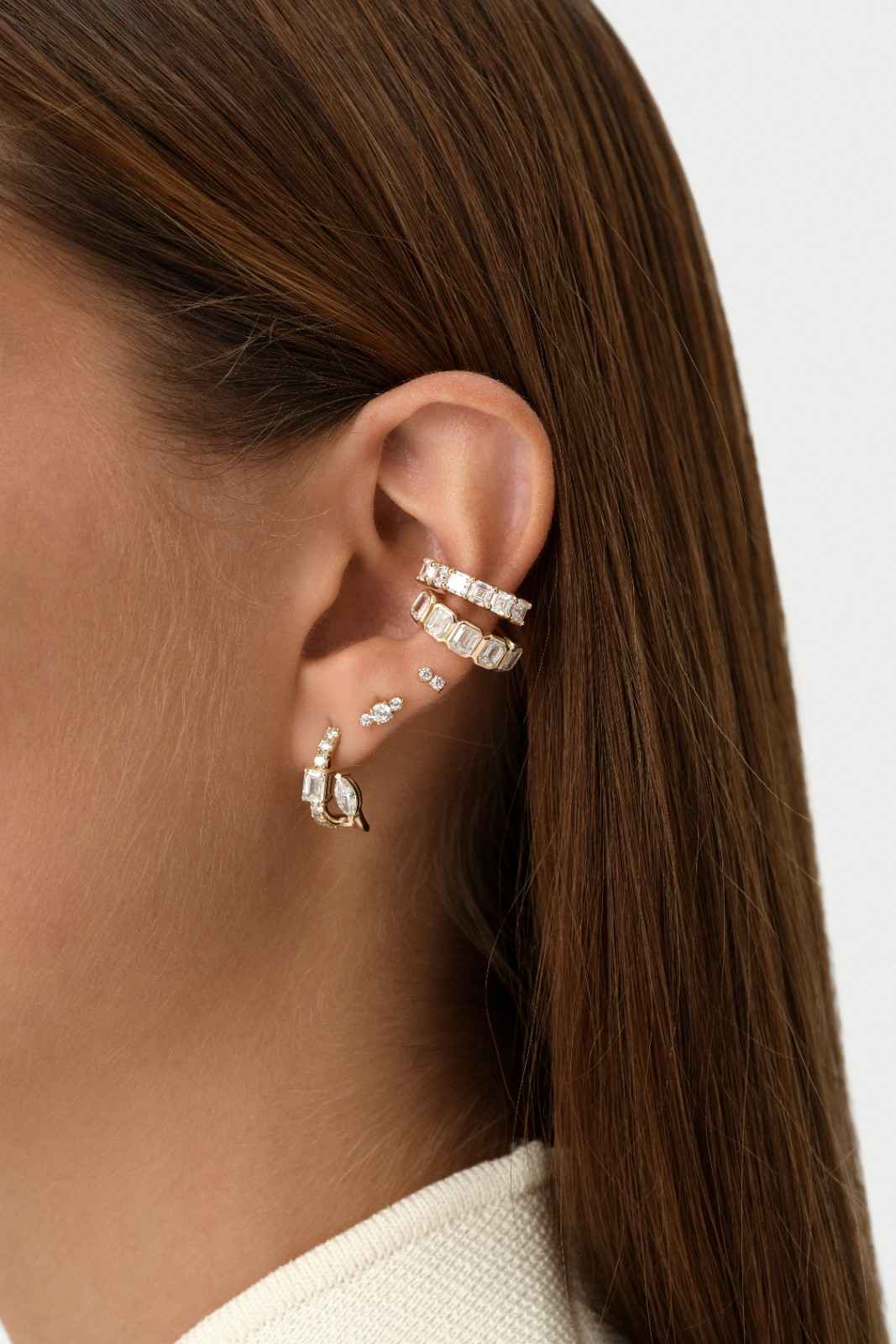
The wedding day earrings category is the most photographed piece of wedding jewelry on the day itself. It appears in every portrait, every candid shot from mid-distance, and in most ceremony photographs. It earns the most careful consideration.
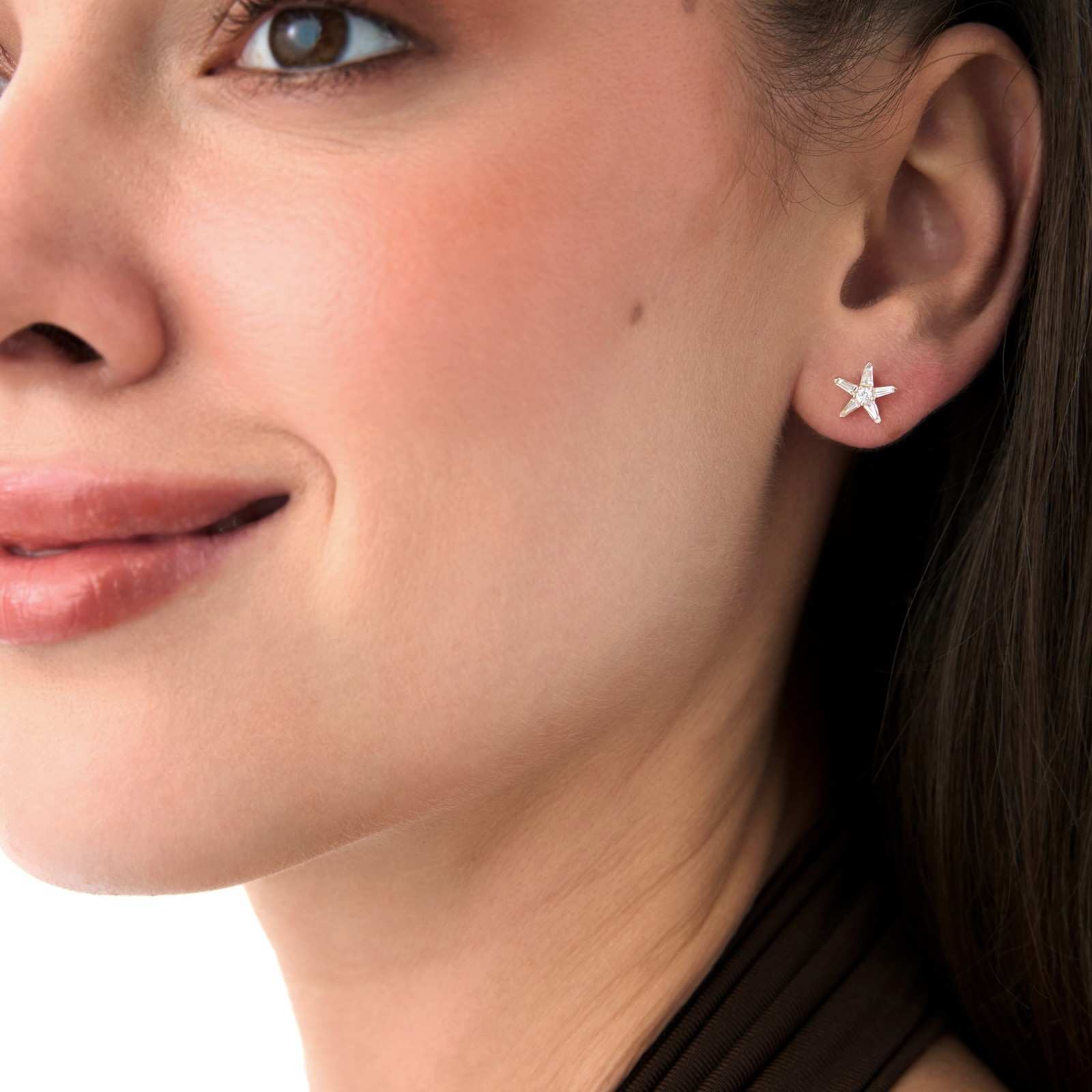
- Bezel-set diamond studs: They are the most reliable choice across every dress style and venue. Bezel set diamond studs sit flat against the ear, never catch on hair or veils, and are photographed as clean points of light.
- Drop earrings with a lever-back closure. These are very photogenic and secure, as the lever-back clicks shut and stays shut, which matters on a night when you will be hugged by everyone you love, repeatedly and from every direction.
- Huggie hoops: They photograph well at close range and feel comfortable all day, making them the most practical wedding day earring choice for brides who love hoops.
- Chandelier and statement styles: Heavy earrings pull and stretch the earlobe, and by late afternoon, the only thing you can think about is taking them off instead of dancing. If you want the visual drama, prioritize that are airy rather than solid, with smaller stones and visible negative space.
- Safe closures: Lever-backs, screw-backs, and push-back clutches are the fastenings worth seeking out. They click or lock into place and stay there, so you don’t worry about losing them while dancing into the night.
The Necklace: How to Match It to Your Dress Neckline and Keep the Overall Look Balanced
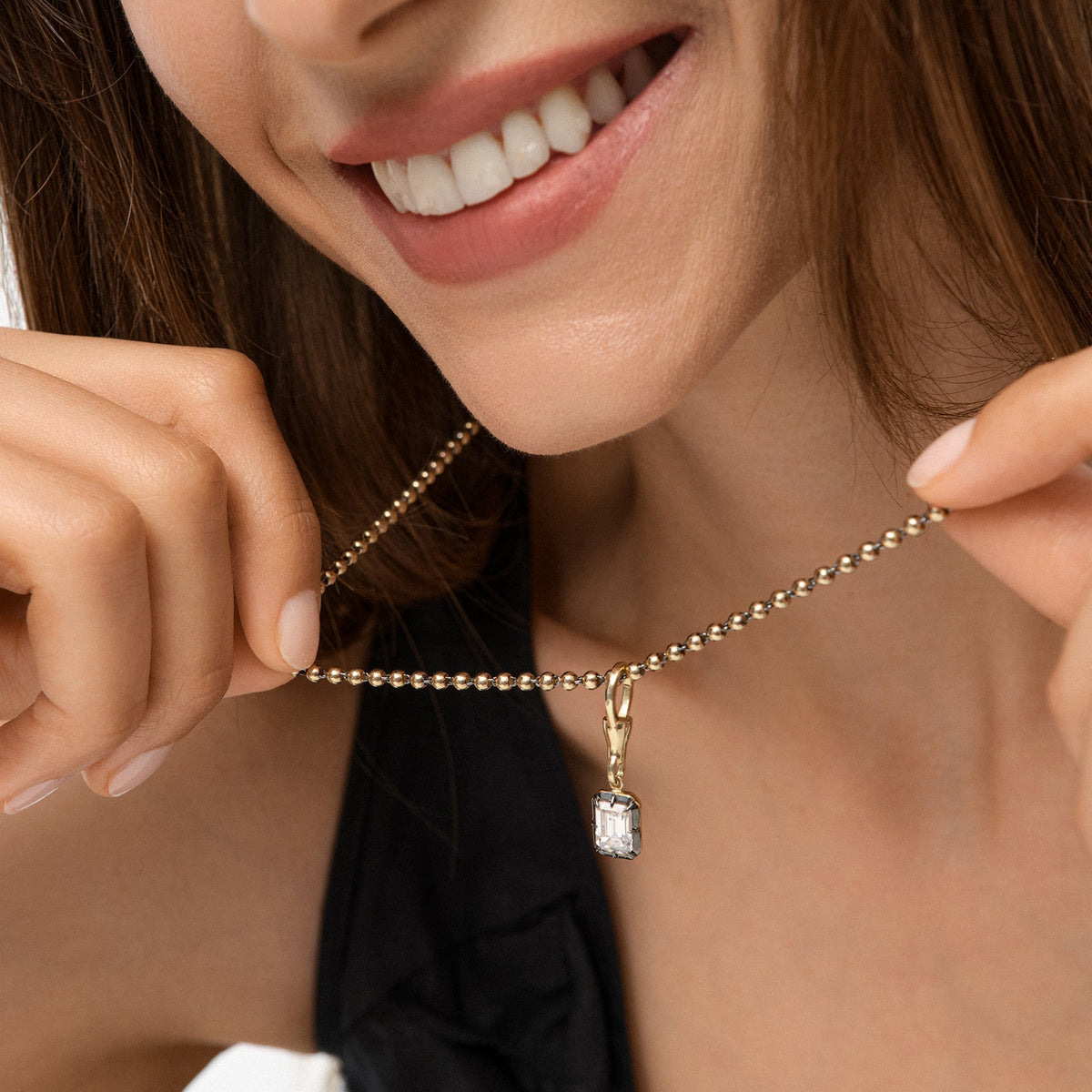
A bridal necklace should frame the neckline. The neckline determines the length and whether a necklace belongs at all. The general rule is that the more the dress does, the less the necklace should.
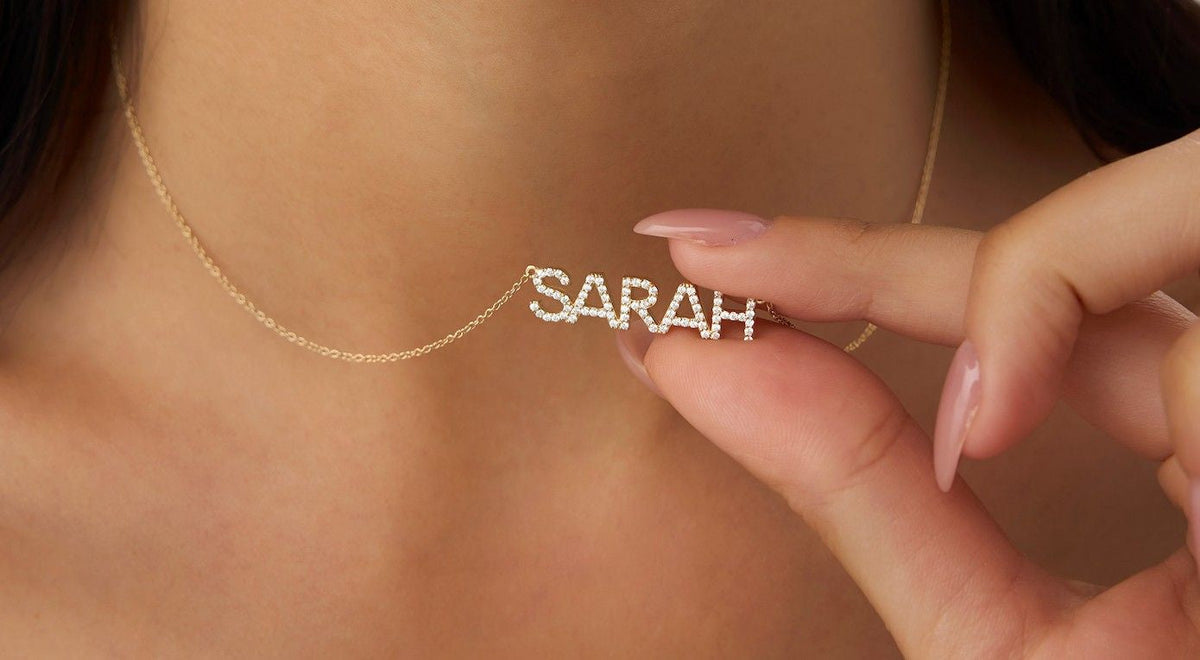
- Strapless and sweetheart necklines: They work with everything. A dainty diamond necklace that sits just above the collarbone, or a longer pendant that drops into the open chest, both work beautifully. The open chest is your canvas.
- V-neck and plunge necklines: They call for a pendant that echoes the V-shape or a chain that drops naturally into the neckline. Avoid chokers and collarbone-length pieces, which interrupt the neckline's natural line.
- Scoop and boat necklines: They pair well with shorter necklaces that sit inside the neckline's curve. A delicate bridal necklace at 14 to 16 inches is usually the right length.
- High necks, illusion necklines, and halter tops: They generally do not need a necklace at all. The dress is already doing the work at the collar. This is where earrings become the anchor.
- Off-shoulder styles: They redirect attention to the collarbone. A clean pendant or a delicate chain that lies on the collarbone without adding bulk works best.
In addition to all our suggestions above, consider diamond necklaces with a chain length in mind because the length determines where the piece sits on your body.

The Bracelet: Why The Tennis Bracelet and The Bangle Remain The Most Popular Bridal Choices
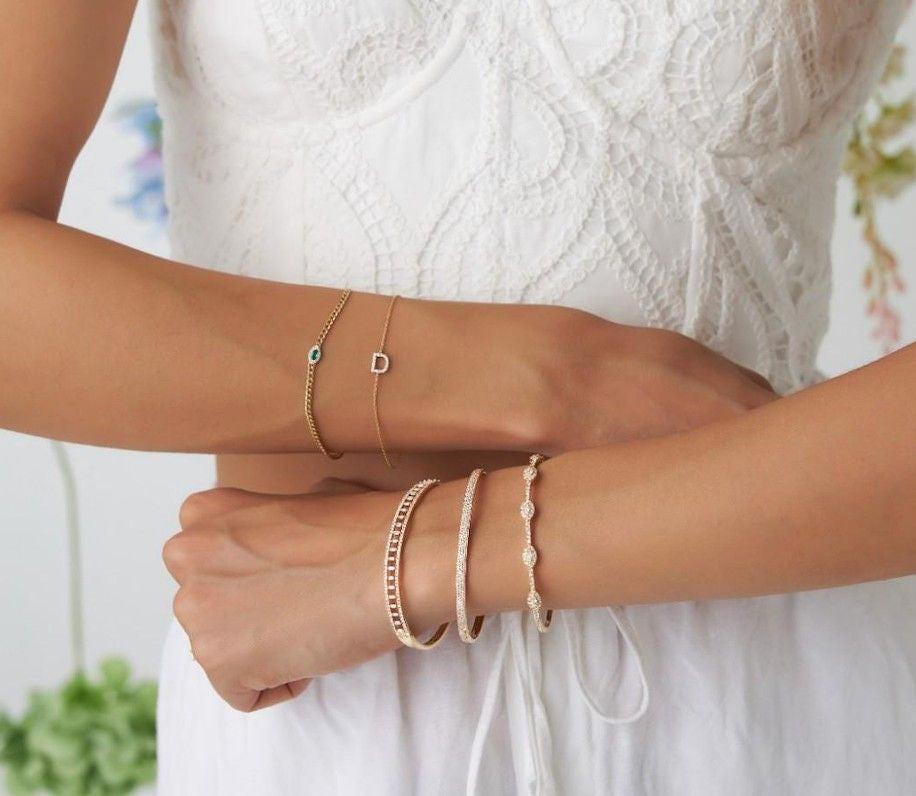
The bracelet you wear on your wedding day has to survive the hand-squeezing of approximately two hundred people, the bouquet toss, and the moment at the end of the night when you reach under the table to take your shoes off. It should hold up.
Heading text | Diamond Tennis Bracelet | Gold Bangle |
|---|---|---|
Why brides choose it | Continuous diamond line creates maximum impact and it photographs as a clean arc of light around the wrist. | The architectural simplicity adds structure and a sculptural quality without overshadowing other pieces. |
What it works with | Almost every bridal jewelry set, particularly strong alongside diamond earrings and a delicate necklace. | Best with a more minimalist look and pairs beautifully with pearl or drop earrings. |
Fit considerations | Should fit snugly enough that it does not slide to the hand, most brides go down one size from their usual. | Should be sized to slide over the hand with minimal effort but sit comfortably on the wrist without slipping off. |
Photography | Catches light in motion shots and first look photographs, creating a sense of movement. | Photographs as a clean, modern line and better in still portraits than in motion |
Security | Safety clasp is essential, confirm it before the wedding day | No clasp, the most secure bracelet option |
Comfort for long wear | Flexible and lightweight, easy to wear for long hours. | Slightly rigid, so the sizing must be exact. |
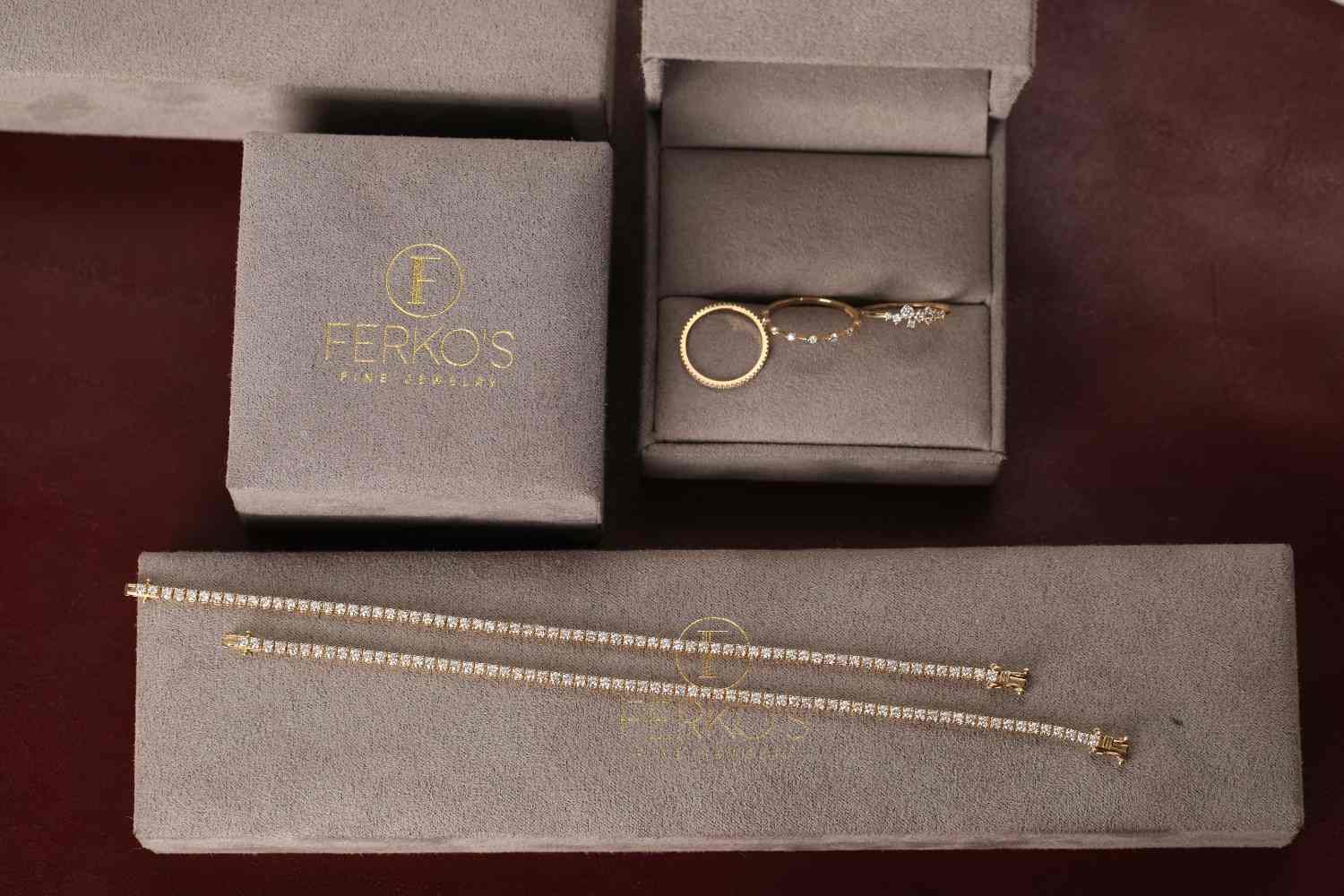
The diamond tennis bracelet remains the most popular choice for a reason that has nothing to do with trends. It's the go-to choice for brides because it solves every requirement simultaneously. It's flexible enough to be comfortable across a long day, it photographs beautifully from every angle without needing to be repositioned, and it works beside every other piece without overshadowing them.
Before You Close Those Three Tabs
The wedding jewelry set that photographs beautifully and wears comfortably is the one that was assembled with intention: one anchor piece, two supporting pieces scaled to follow it, a gold tone that works with your dress and your skin, and a bracelet that is still on your wrist when the band plays the last song.
The bride who zooms in on her photographs three years later and still loves what she sees is almost always the one who made a considered decision rather than a panicked one. Pick your anchor and build from there.
And if you are also thinking about jewelry for your bridesmaids, choose the pieces that photograph well and that feel personal enough to wear again long after the wedding.